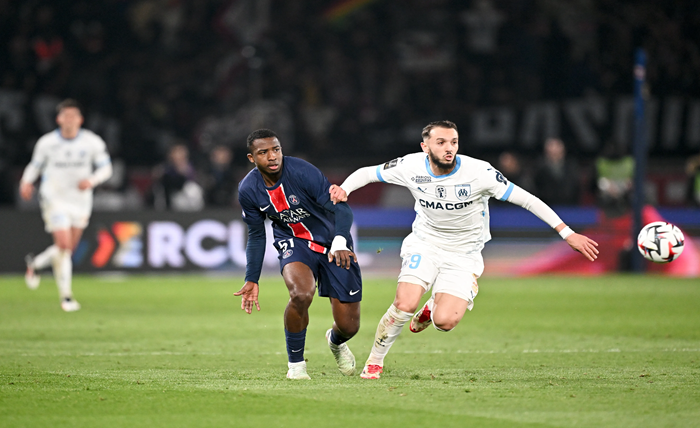
Markets overrate familiarity. In 2022/23 Ligue 1, several high‑profile sides frequently missed handicap expectations, punishing those who followed name value over context. Their pattern of underperformance wasn’t random — it stemmed from tactical volatility, psychological inconsistency, and inflated odds perpetuated by brand reputation. Understanding why these teams kept breaking bettor trust transforms observation into defensive betting discipline.
Why Some Teams Keep Losing Against the Spread
Spread failure usually arises from expectation misalignment. When bookmakers price a club by reputation rather than current structure, margins stretch beyond realistic winning probability. Teams with flashy scoring potential but fragile control, or those transitioning between systems, often fail to justify heavy handicaps. Bettors neglecting regression signals chase old patterns while the market quietly adjusts.
Ligue 1 Teams with Lowest Handicap Conversion
In 2022/23, PSG, Monaco, and Montpellier ranked among the poorest handicap performers. Their struggles shared a common thread: unreliable rhythm management and inconsistency after securing leads. Each covered fewer than 45% of their spreads despite maintaining positive league positions. For handicap bettors, this paradox illustrates how scoreline dominance can coexist with betting inefficiency.
| Team | Handicap Win % | Avg. xG Diff | Clean Sheet % | Drawdown Indicators |
| PSG | 44% | +0.72 | 47% | Low goal intensity post 70’ min |
| Monaco | 42% | +0.58 | 39% | Defensive line instability |
| Montpellier | 41% | +0.25 | 34% | Overreliance on early leads |
Here, strong league finishes masked inconsistency within odds performance — showing how continuous overpricing narrows betting edge.
Tactical Drivers of Handicap Decline
Excessive Possession with Low Conversion
PSG’s structural dominance often produced narrow wins relative to lofty spreads (–1.5 or –2 lines). Monopolizing possession failed to alter game tempo enough to widen margins. Similarly, Monaco’s aggressive transitions amplified variance — big wins offset by sudden collapses. Tactical imbalance propagates unreliable outcomes, making them dangerous for pre‑match handicap continuity.
When Market Sentiment Distorts Rational Lines
Bettors inherently favor teams branded as elite. Consistent following by retail volume forces bookmakers to shade odds downward, compressing potential return. Even minor underperformance then converts into frequent line losses. Distinguishing between dominance and efficiency is critical: a single‑goal win at –1.25 still signals negative expected value despite the result.
Analytical Framing via UFABET
Strategic bettors reviewing spread outcomes often depend on real‑time market behavior to detect sentiment oversaturation. Within ufa168 มือถือ, tracking live line fluctuations during Ligue 1 fixtures highlighted recurring traits — early money on heavy favorites followed by stagnation in handicap performance. Observational backtests revealed how late‑season bettors who stepped back from PSG covers retained higher ROI by emphasizing data variance over emotion. The case highlights that emotional loyalty, unsupported by tactical logic, remains the quietest risk factor in handicap betting.
Statistical Warning Signs of Persistent Handicap Risk
Certain numerical thresholds repeatedly signal overvaluation:
- Handicap Cover < 45% over 10+ games – chronic inefficiency.
- Goal‑margin variance > 1.4 – unstable control.
- Shots allowed 10+ per match – fragile game management.
- Average win margin < 1.0 amid –1.25 lines – systemic under‑delivery.
Recognizing these markers prevents habitual chasing of top‑profile favorites ill‑suited to inflated expectations.
Psychological Dimensions of Overconfidence
Handicap failures often reflect player complacency in dominant clubs. Leads prompt conservation mode instead of expansion, sacrificing bettors’ margin even amid victories. Conversely, underdogs display higher intensity as they defend improved price‑performance ratios. This behavioral inversion sustains public mispricing: favorites win, yet punters lose.
Contextual Variables Reinforcing Volatility
Injuries, fixture congestion, or tactical experimentation further dilute spread reliability. For 2022/23 PSG, managerial rotation and Champions League prioritization reduced domestic aggression, while Monaco’s youthful core amplified momentum swings. Modeling ignores such unquantified disruptions, which human observation must balance before line entry.
Comparing Shortcut Assumptions and Data‑Anchored Judgments
Assuming a “must‑win” scenario rarely supports handicap logic. Bettors assigning emotional weight to motivation over structure overlook fatigue constraints and strategic preservation behaviors. Replacing narrative reasoning with quantitative assessment — expected‑goal differential stability, tempo control rate, and ball recoveries — builds more objective protection against stop‑loss cycles.
Cross‑Sector Insight from casino online Probability Models
Within computational ecosystems dependent on repeated statistical events, such as casino online probability engines, outcomes converge toward equilibrium through sample expansion. Translating that insight to football spreads clarifies why overvalued favorites regress. Each marginal inefficiency compounds over enough fixtures until return rates equalize. Bettors interpreting this principle view short‑term losses as structural correction rather than temporary misfortune, reinforcing disciplined avoidance of skewed risk lines.
Summary
The 2022/23 Ligue 1 season demonstrated that handicap disappointment often arises from faith misplaced in pedigree, not process. PSG, Monaco, and Montpellier exemplified teams structurally rewarding contrarian restraint. For bettors, caution means not fading success — but challenging presumption. Sustainable handicap play depends on discerning when dominance aligns with efficiency, and when market admiration quietly erases value.